
5 things to help your children learning Chinese at home
January 18, 2017
It’s January 2017! I am very excited for a brand new year. While everyone is working on their new year resolutions (even my little 5 year-old girl did her new year resolution at school), I am more concerned about how to raise my children in a bilingual environment. Things have been getting tough since the girls start their (English) school. They speak more English and are more reluctant to speak Chinese to me.
If you are like me, raising your children in a different country other than your home country. It is so easy for your children to be surrounded by the tradition and culture of whichever country you are currently living in — in my case the UK. And also if you are like me, by any chance, married to a man who doesn’t speak Chinese, and your first language at home is English. You will realise that it is so easy for the children not to speak Chinese at all or speak Chinese in a foreign accent which is unbearable for me. And I have decided that I take the full responsibility of my children’s Chinese skills which is not just the language but also the tradition and culture. There are 5 things which I have been implementing in 2016 at home to help my children learn Chinese. The results are improving — specially for my older one Coco, she is currently fascinated by the Monkey Sun (孙悟空)and love to talk about it with me in Chinese. She is also speaking Chinese with our nanny without mixing any English words in it. Every little progress deserves a shout out. So one of the new year resolutions for me in 2017 is to consciously and firmly implementing the following ways to help them learn Chinese.
- Speak Chinese to them on a daily basis and whenever you can
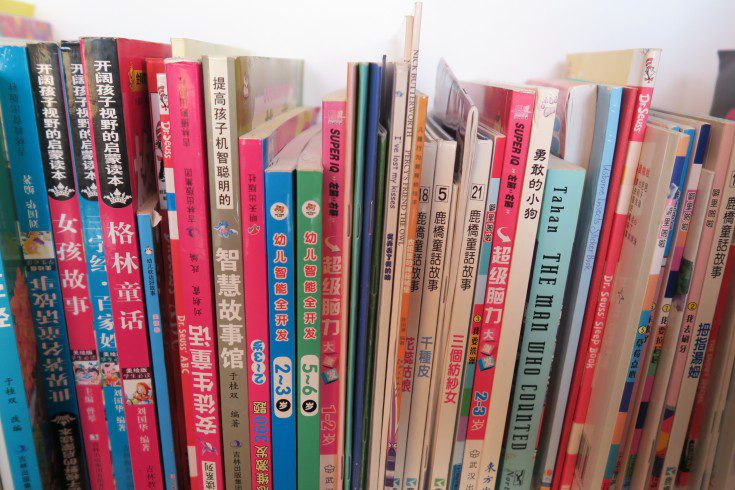
Take it or not, the native speaker (in my case it is me) takes the full responsibility of our children’s Chinese learning. I mean full responsibility, anything else are all excuses such as my husband can’t speak Chinese, it is too complicated to explain things twice in two different languages. Once you fully accept that it is your responsibility to teach /expose your children Chinese, you will want to speak to them in Chinese, read to them in Chinese, find out their interests and discuss them in Chinese etc. Remember massive actions are the key to progress and improvement.
2. Watch Chinese children programmes instead of English ones
 In our household, it is always a debate about when the girls should watch TV and how long they should watch for? And obviously, I am very reluctant to allow them to watch too much English TV. And then I discovered the Sun TV Box which has more than enough Chinese live streaming channels directly from mainland China including CCTV and all the local channels. It transformed our household TV watching experience. I am excited to show the girls all the TV programmes I used to watch when I was little. There will be times when you are tired and run out of ideas to entertain them — put them in front of Chinese programmes at least you know they are learning. The girls are currently fascinated about ‘The Monkey legend’ (西游记). If you haven’t got one of those TV box, go grab one, you won’t regret it.
3. Start introducing Chinese writing to them
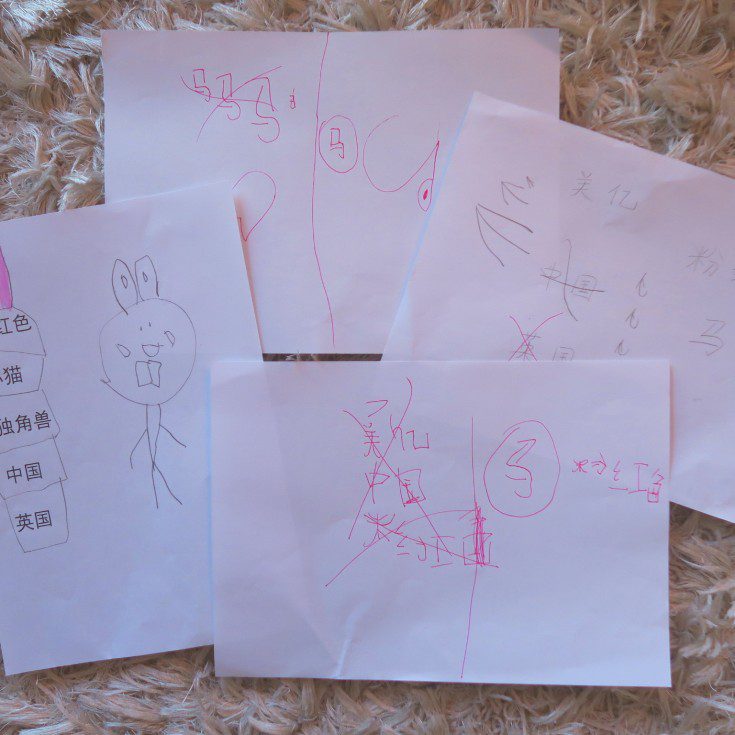
Ahh, the wonderful Chinese characters! It looks complicated — at least majority of foreigner think so. But we learnt it and millions of Chinese children are learning it which means it is not that difficult than we thought. The interesting thing I found is that my children see the Chinese characters as some form of art. They love copying them from the printed Chinese writings (apparently they are not sure about my writing which I don’t blame on them). Normally they will ask
me to print out the Chinese characters of their favourite things such as unicorn, pink, kitten etc. After all, it is all about creating an enjoyable experience for them so that they will continue to be interested in writing them. It is a long journey and we got to start from somewhere even 5 minutes a day counts.
4. regular visits to China for culture tours and family visits
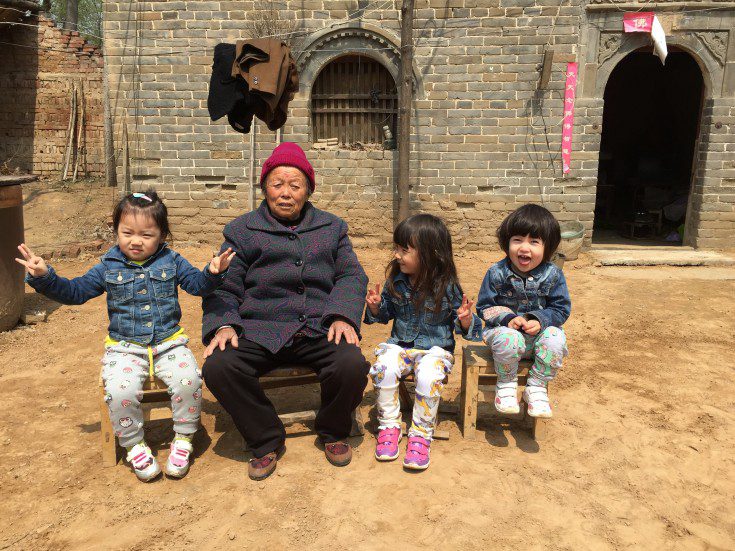
I love this photo — my grandmother with her three great grand daughters in front of her house which was built by my grandpa 60 years ago. She spends all her life there and refuses to move after my grandfather passed away 8 years ago. From the photo, you can see that the girls were fascinating about my grandmother. I remembered that they were dashing out to play with the dirt and branches immediately after this photo shoot. They were happily self-entertained by everything in my grandmother’s front yard and very sad when we told them we had to leave. Well, it certainly reminds me of many my childhood memories playing in the very same place. The modern toys and theme parks just can’t beat a natural, down to earth and random laid out yard in a rural country house.
wherever we are, China is our home. It is part of us and calling us from time to time. And I want it to be part of my children too. The best way to do this is to take them there and let them experience themselves in their own way.
5. Have a Chinese-speaking au pair or nanny if you can
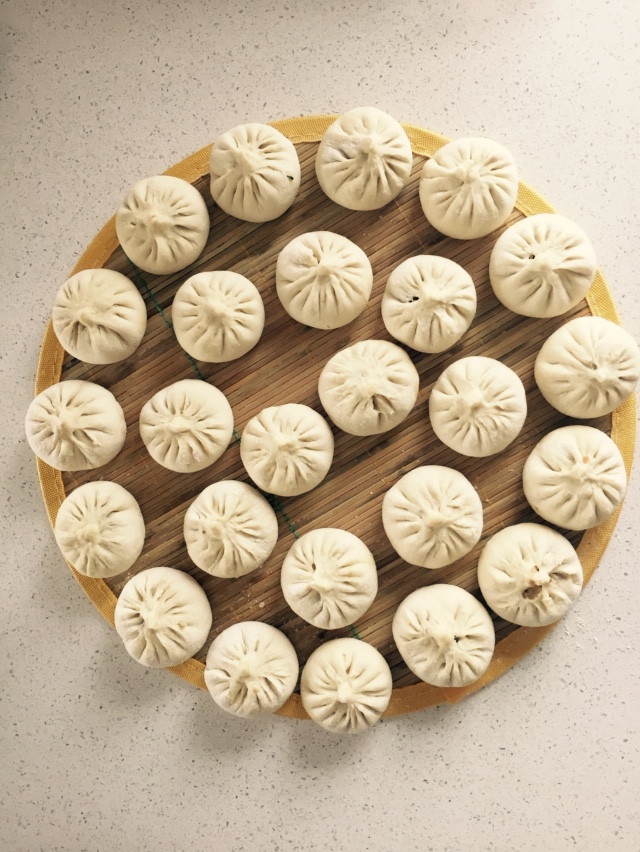
There are many benefits of having a Chinese speaking au pair or nanny at home. One of the many is that you are not the only one speaking Chinese at home any more. It becomes a norm to the children when they see you communicate with the nanny in Chinese and they will naturally speak to you in Chinese if they would like to join the conversation. And if you are lucky to find someone who cooks great Chinese food like my Ayi does, you kind of unconsciously teach your children all the names of Chinese food. Here is the company I’ve used for Chinese speaking au pair and nanny http://mandarinaupair.com Go have a look if you are interested.
These are just my suggestions. Whichever way you are currently using or choose to use, the most important things are that you are enjoying the learning experience with your children and the purpose of we are doing this is not only to help our children gain another language but also help our children to understand/accept that Chinese(language/culture) is part of them and we are all proud of it. In this way, we hope that our Children grow to be self-loving, acceptable and compassionate human beings in this appearing more diversified work.

Jan 18, 2017
Share


0 comments | Join the Conversation
Leave a Reply
Featured Posts


- © 2026 Xiaofang Sutton
- Blog created by The Pixel Parlour


0comments